Original Thornton garages have the stains and the salt history. North Thornton’s new filings have younger concrete that should not be coated the month it is poured, even if the house is closed and the owner is ready.
Wind on the north side drives snow under doors. A coating does not fix a door seal. It does give you a floor you can dry without turning the slab to mud.
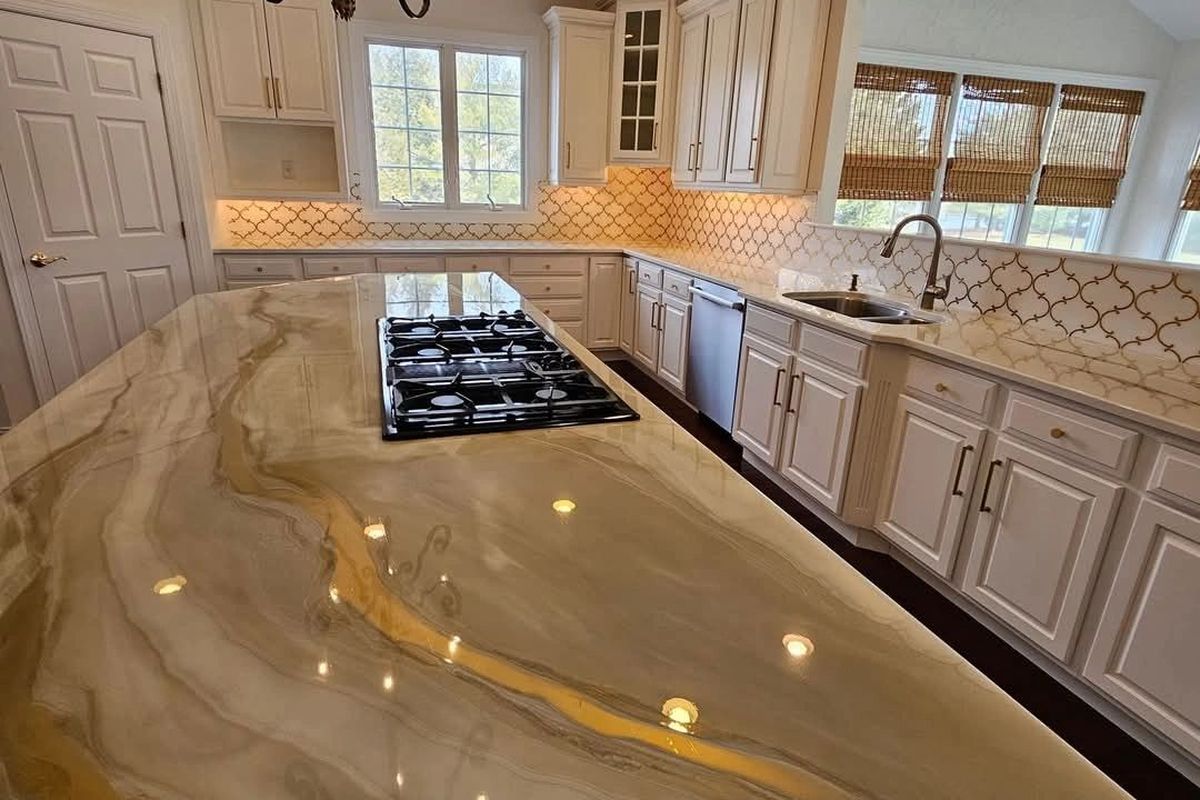
The photo is an example finish, not a documented Thornton job.
Thornton has both older garage slabs and newer concrete, and neither should be judged by appearance alone. A dry-looking surface can still release moisture vapor that weakens the bond. Before choosing a coating, ask how the installer will assess the slab and what the result means for the proposed system. A moisture check is part of deciding whether the floor is ready, not a formality after the product is selected.
Calcium chloride testing estimates moisture emission at the surface; in-slab relative humidity testing measures conditions deeper in the concrete. They are different methods, and results are not interchangeable. The contractor should explain which test fits the coating plan, where testing will occur, and what limits the coating maker sets. Temperature and humidity during testing matter, so a single reading without conditions may not tell the whole story.
Basement floors need a separate conversation from garage floors. Ask whether there are signs of water entry, dampness at the perimeter, or pressure from moisture below the slab. A coating cannot correct a drainage or water-intrusion problem. If the source is uncertain, pause before covering the concrete. A coating installed over active moisture can blister or lose adhesion, leaving removal and surface repair as the next steps.
Compare quotes by the preparation and layer sequence, not just the finish name. Diamond grinding mechanically removes weak material and opens the surface to a specified concrete surface profile, or CSP. Acid etching is less predictable because it may not remove old coatings, oils, or other contamination. Ask what condition the crew expects to find and how it will confirm the prepared slab is sound and clean.
Ask how cracks and control joints will be treated. A crack may need cleaning and a compatible repair material, while a control joint is designed to accommodate movement and may need to remain visible or be treated differently. Then have the contractor describe the primer, base coat, flake broadcast if included, and topcoat. Each layer has a job; skipping or rushing one can compromise the system.
For a garage, discuss hot-tire pickup, abrasion, and how quickly the floor can return to service. Epoxy can provide a useful base, while polyaspartic and polyurea systems may offer faster cure windows; actual performance depends on the product and installation conditions. Ask about UV stability because some finishes amber with sun exposure. Confirm temperature, humidity, and recoat limits, plus the slip-resistance and cleaning plan for the finished floor.
Ask the installer to explain the target concrete surface profile and how the crew will check it across the slab. The surface should be consistently prepared, with weak material and contamination addressed. A smooth, glossy patch or leftover coating can signal uneven preparation. The quote should say what happens if grinding exposes damage or a different surface condition.
It measures moisture conditions inside the concrete rather than only at its surface. The result helps determine whether a proposed coating is suitable under the conditions tested. Ask for the reading, test locations, and the coating system’s stated moisture limits. Testing must follow the method’s requirements; an informal surface check is not a substitute.
Not automatically. Control joints are intended to manage concrete movement, so filling them rigidly or hiding them may lead to cracking or separation as the slab moves. Ask how the installer will distinguish joints from cracks and what treatment is planned for each. The answer should fit the floor’s condition and the selected coating system.
The answer depends on the full coating system, slab and air temperatures, humidity, and the stated cure schedule. Ask for separate timelines for foot traffic and vehicle traffic, and follow them even if the surface feels dry. A rushed return can mark or lift a finish before it has developed the needed strength.
Start by removing loose grit, which can scratch the finish under shoes or tires. Use a mild, coating-compatible cleaner and a soft mop or brush, then rinse away residue if the product instructions call for it. Ask the installer for written care guidance, including which cleaners or tools could dull or damage the topcoat.
Tell us about the floor in Thornton. A photo and a rough size are enough to start a written estimate. No street address on our side — local pros come to the slab.
Denver Epoxy Floors is an independent referral service that connects you with local epoxy flooring pros.
 DENVER