Parker’s larger garages are good flake-floor candidates: room to work, daily parking, and winter brine like the rest of the metro. Wind drives snow and dust under doors on the open southeast side. The coating will not seal the door. It will give the slab a surface you can dry.
Newer filings need a pour date. A big empty garage is tempting to coat immediately. A slab that is still curing will blister on its own schedule, not yours.
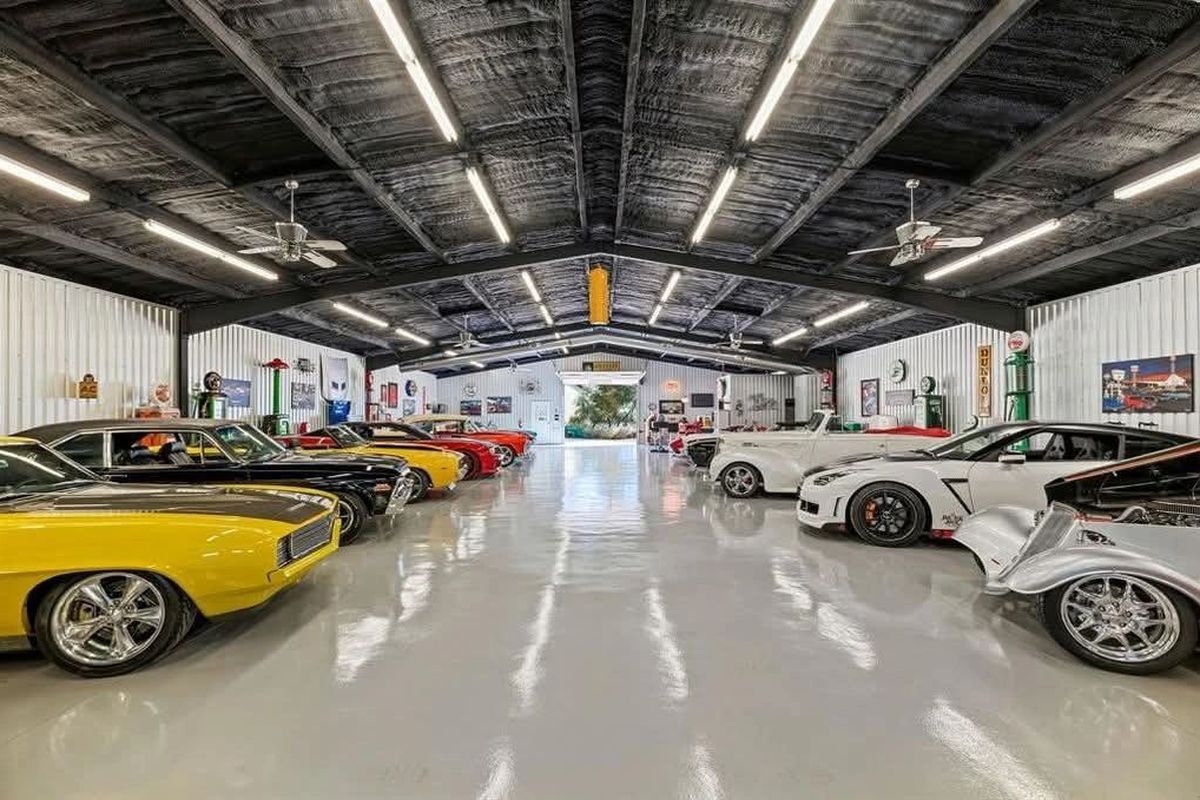
The photo is an example finish, not a documented Parker job.
A floor can look dry and still release moisture from below. That matters in Parker garages and lower-level rooms, where a coating must bond to the slab rather than trap moisture beneath it. Ask how the contractor will check the concrete and what result the proposed system allows. A visual inspection alone cannot tell you whether moisture is within the coating manufacturer’s limits.
Calcium chloride testing estimates moisture vapor emission at the surface; in-situ relative humidity testing measures conditions inside the slab. They are different methods, and the right choice depends on the project and coating requirements. Ask to see the test results and how they affect the product selection. A reading is useful only when compared with the system’s stated limits and the conditions during testing.
Preparation should create a consistent concrete profile, not just make the floor look clean. Diamond grinding removes weak surface material and opens the slab; acid etching is less controlled and may not remove contaminants or create an even profile. Ask what concrete surface profile, or CSP, the coating calls for. Cracks and control joints also need a written plan: some are repaired, while moving joints may need to remain flexible.
Epoxy, polyaspartic, and polyurea are system components, not interchangeable labels for a complete floor. A quote should identify the primer, base coat, decorative layer if any, and topcoat. For a garage exposed to winter brine and grit, ask how the proposed layers are meant to handle abrasion and hot tires. A basement has different demands, especially moisture conditions and the need for a finish suited to indoor use.
A flake floor depends on the sequence as much as the material: primer where specified, base coat, an even flake broadcast, removal of loose flakes, and a compatible topcoat. Ask for the temperature and humidity limits, plus the recoat window for each layer. If a crew misses that window, the next coat may need additional preparation. A rushed schedule is not a substitute for following the system instructions.
Topcoat choice affects sunlight stability, cleanup, and traction. Some epoxy finishes can amber with UV exposure, so ask whether the topcoat is UV-stable if sunlight reaches the floor. For a Parker entry or garage, discuss slip resistance when the surface is wet or gritty; added texture can help, but may take more effort to clean. Get the cure time for foot traffic and vehicles in writing, then follow it.
It may. Surface appearance does not show moisture moving through the concrete. Ask whether calcium chloride or in-situ relative humidity testing fits the project, and request the recorded results. The contractor should compare those readings with the limits for the full coating system, not assume that a slab is ready based on appearance alone.
Not reliably in every case. A stable crack may be repairable, but a crack that moves can reappear through the finish. Control joints are designed to accommodate movement and often need to remain visible or receive a flexible treatment. Ask the contractor to identify each crack and joint and explain how it will be handled.
Look for the planned preparation method, the target concrete surface profile, and how oil, old coatings, weak concrete, and repairs will be addressed. “Prep included” is not enough detail by itself. Ask whether the installer will inspect the exposed slab after grinding and confirm it is suitable before applying the coating layers.
There is no single safe wait time for every system. Temperature, humidity, slab conditions, and the specific materials affect cure. Ask for separate times for foot traffic and vehicle traffic, and follow the written instructions. Parking too soon can leave tire marks or cause the coating to lift from the concrete.
Follow the system’s care instructions and wait until the coating has reached the stated cure stage before washing it. Sweep or dust-mop grit regularly, since abrasive particles can wear the finish. Use a compatible cleaner and avoid harsh tools or unapproved chemicals. Ask whether the chosen texture changes the recommended cleaning routine.
Tell us about the floor in Parker. A photo and a rough size are enough to start a written estimate. No street address on our side — local pros come to the slab.
Denver Epoxy Floors is an independent referral service that connects you with local epoxy flooring pros.
 DENVER