Aurora garages, especially in the older western neighborhoods, see the same magnesium chloride as Denver and often more wind-blown grit. Flake hides the residue. Newer southeast sections have cleaner, younger slabs that still need a winter top coat because the commute does not change.
If the garage is unheated, a local pro will not pretend January is a good install month. A photo of the slab and a note about heat are the whole start.
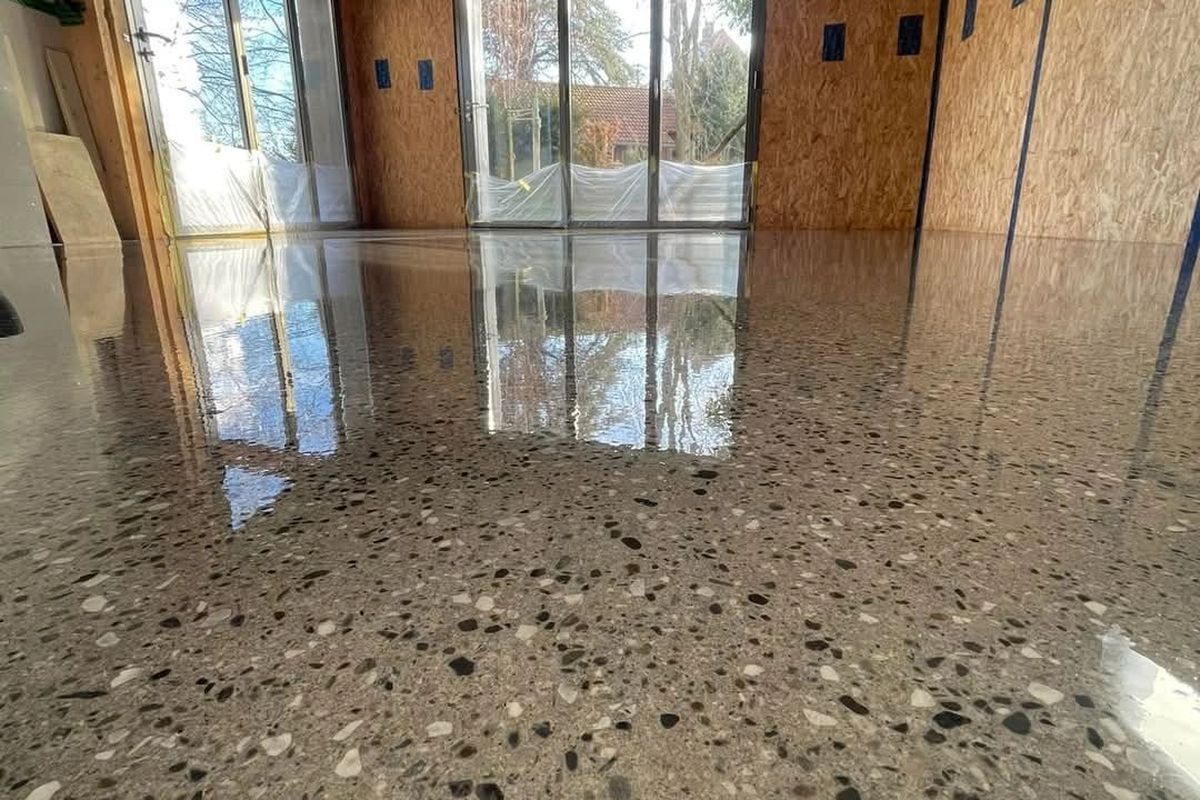
The photo is an example finish, not a documented Aurora job.
Aurora garages can have very different slab histories, even when two floors look alike. Before choosing a coating, a contractor should check for moisture vapor and contamination that could weaken the bond. Calcium chloride testing measures moisture emission at the surface; in-slab relative humidity testing checks conditions deeper in the concrete. The right method depends on the project and the coating system.
A sound prep plan usually starts with diamond grinding, which removes weak surface material and opens the concrete to a specified surface profile, or CSP. The profile must suit the coating being installed. Acid etching is not an equal substitute: it can leave residue, fail to remove old coatings, and produce an uneven surface. Ask how the crew will verify the slab is ready before coating begins.
Cracks and control joints need separate decisions. A stable crack may be repaired before coating, but a joint intended to move should not simply be filled and hidden under a rigid finish. Ask which cracks will be repaired, which joints will remain visible, and how the finished coating will treat them. Those details help prevent a neat-looking installation from splitting or chipping at weak points.
A garage floor has to tolerate tires, grit, and vehicle fluids. A typical system may use primer, a colored base coat, flake broadcast, and a clear protective top coat. Each layer has a job, and the coating schedule must fit the slab temperature, air temperature, and humidity limits stated for that system. Ask for those limits, not just a preferred installation date.
Polyaspartic and polyurea top coats can offer faster return to service than some epoxy systems, but faster curing leaves less time to apply and correct the material. Epoxy can provide a useful base layer, while the top coat may be chosen for wear, UV stability, or cure needs. Exposed areas need attention to UV stability because some coatings can amber with sunlight; ask what the specified finish is expected to do.
Basements and work areas call for a different check than a vehicle bay. Moisture entering through or beneath a slab can cause coating failure even when the room feels dry, so testing should guide the system choice. For shops, discuss chemical exposure, traffic, and slip resistance. For any room, request written instructions for cure time, recoat windows, and when foot traffic, vehicles, or equipment can return.
There is no single safe return time for every coating. Temperature, humidity, slab conditions, and the material system all affect cure. Ask the installer for separate times for foot traffic, light use, and parking vehicles, plus the conditions those times assume. Do not use the floor sooner just because it feels dry.
It can be specified with an added texture, but more texture can make cleaning harder and may change the floor’s appearance. Ask to see or feel a sample and discuss the expected wet conditions. A smooth clear coat should not be assumed to provide the same traction as a textured finish.
Follow the coating installer’s care instructions and wait until the stated cure period has passed before routine cleaning. In general, remove loose grit with a soft broom or dust mop, then use a mild cleaner and water as directed. Avoid harsh chemicals or abrasive tools unless the system guidance allows them.
Hot tire pickup can happen when tires heat the floor and then cool while parked, especially if the coating is poorly bonded, under-cured, or not suited to the use. Good surface preparation and the right system matter. Ask what the installer specifies for parked vehicles and how long to wait before parking.
The installer should explain the test result and pause before applying a system that the slab cannot support. Options depend on the source and level of moisture and on the coating manufacturer’s limits. Ask for the proposed next step in writing; coating over an unresolved moisture problem can lead to costly removal and rework.
Tell us about the floor in Aurora. A photo and a rough size are enough to start a written estimate. No street address on our side — local pros come to the slab.
Denver Epoxy Floors is an independent referral service that connects you with local epoxy flooring pros.
 DENVER