Home garages here can take a normal flake system. Shops and industrial bays need an honest description of oil, wash water, and whether the building is heated. An unheated metal shop in January is a wait, not a creative install.
If wash water runs across the slab, tell us where it goes. A coating and a drainage problem are different projects, and the north exposure makes a wet floor freeze at the door.
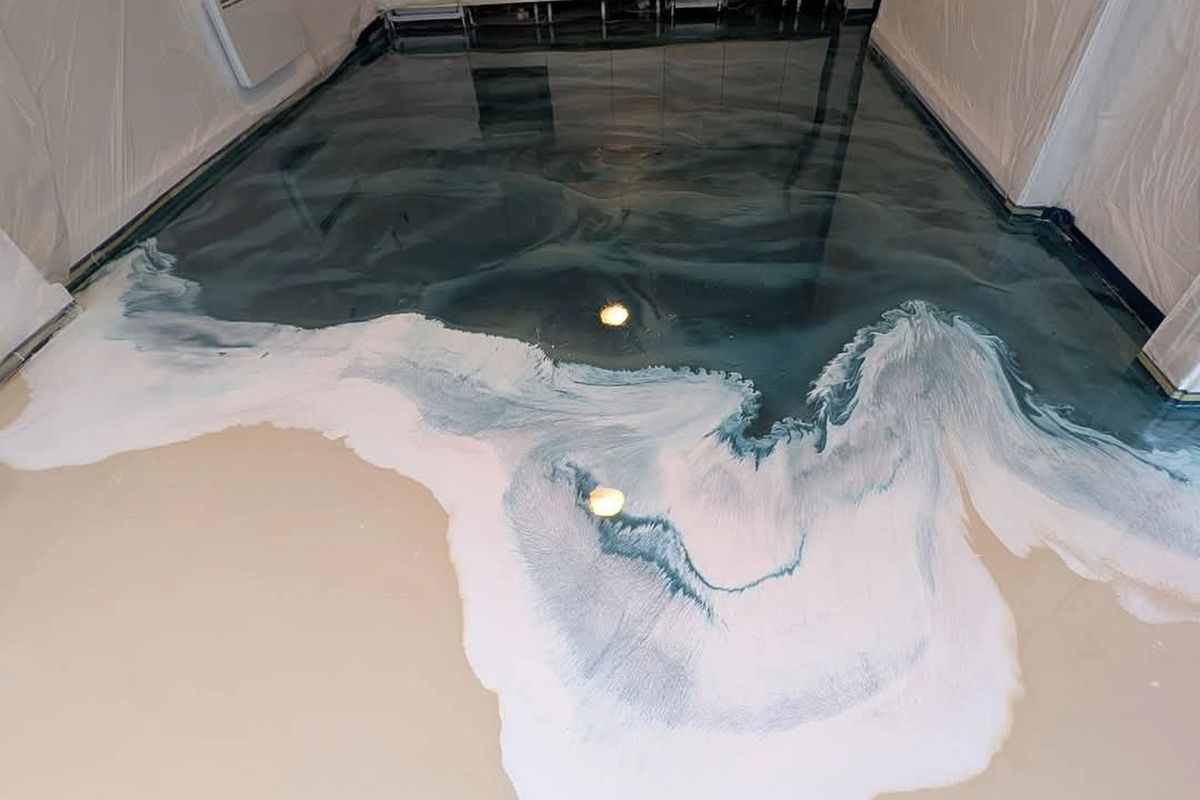
The photo is an example finish, not a documented Commerce City job.
Shop slabs can look sound and still have oil, sealer, or weak concrete that keeps a coating from bonding. A careful estimate should include inspection and mechanical preparation, usually diamond grinding to remove contaminants and create a consistent surface profile. Ask what concrete surface profile, or CSP, the installer is targeting and how they will confirm the slab is ready before coating.
A dry-looking floor does not prove it is dry inside. Moisture vapor can push a coating loose or cause blisters, so ask whether the contractor recommends calcium chloride testing or in-slab relative humidity testing for your conditions. The methods measure moisture differently. If results are outside the coating system’s limits, the next step should be a clear plan, not a promise that extra coating will solve it.
Oil spots, cracks, and control joints need separate decisions before work starts. Grinding may not remove oil that has soaked deeply into concrete, and cracks can move again after repair. Ask which defects will be filled, which joints will remain flexible or visible, and whether those repairs are included in the written scope. A rigid coating across a moving joint can split.
The right system depends on what happens on the floor, not just its appearance. A home garage, a work bay with equipment, and a space exposed to regular washdown have different demands. Describe vehicle traffic, chemical spills, cleaning methods, and downtime honestly. Confirm that the proposed coating is suitable for those conditions and that wash water has a safe route off the floor.
Ask for the full layer schedule: surface preparation, any primer, base coat, flake broadcast if specified, and the final topcoat. Epoxy commonly serves as a base, while polyaspartic or polyurea may be used in parts of a system. These materials are not interchangeable by name alone. Compare the complete system and its installation limits, not a single product label.
Temperature and humidity affect application, recoat timing, and cure. Get the acceptable slab and air conditions in writing, along with the required wait before foot traffic, vehicles, equipment, or washing. For floors exposed to sunlight near an opening, ask about UV stability and possible ambering. For wet or oily work areas, discuss slip resistance and how the texture will affect cleaning.
Ask the installer to assess moisture risk before choosing a system. Calcium chloride tests measure moisture leaving the slab surface; in-slab relative humidity probes measure conditions within the concrete. The right method depends on the project and coating requirements. Review the results against the specified system’s limits before approving installation.
Not without checking whether oil has penetrated the concrete. Surface cleaning alone may leave contamination in the slab, which can interfere with adhesion. Ask the contractor how they will identify affected areas and what preparation they propose. If the contamination cannot be removed or isolated reliably, coating that spot may not be appropriate.
Usually, they should not simply be hidden without a plan. A crack may move, and control joints are intended to manage slab movement. Ask which cracks will be repaired, what material will be used, and whether joints will remain visible or flexible. The finished surface may show joint lines even when the work is done correctly.
Ask for the proposed surface texture and discuss the floor’s expected use, including water, oil, and cleaning. A smoother finish may be easier to wipe, while added texture can improve footing but hold dirt. The installer should explain the tradeoff and make clear how the selected finish will be maintained.
The answer depends on the materials, site conditions, and the system’s cure schedule. Ask for separate return-to-service times for walking, vehicle traffic, heavy equipment, and washdown. Do not rely on a coating feeling dry to the touch. Temperature and humidity can affect cure, so get the timing confirmed for the actual installation conditions.
Tell us about the floor in Commerce City. A photo and a rough size are enough to start a written estimate. No street address on our side — local pros come to the slab.
Denver Epoxy Floors is an independent referral service that connects you with local epoxy flooring pros.
 DENVER