Broomfield residential garages want the same flake-and-brine spec as the rest of the northwest corridor. Many are attached and can be heated for a winter install. Local pros still measure the slab, not the thermostat on the wall.
A finished room that is not a garage can take a quieter floor. Keep that request separate so the car bay does not inherit a glossy system it will scuff in a week.
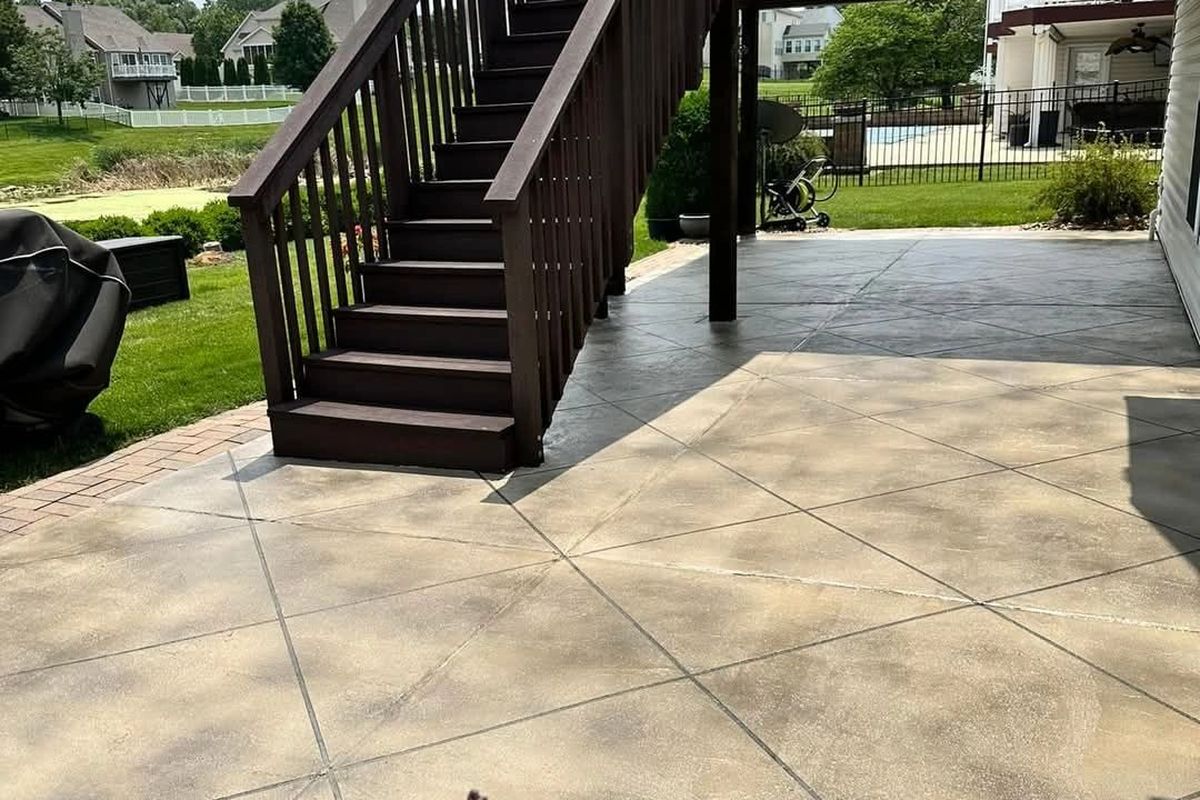
The photo is an example finish, not a documented Broomfield job.
An attached garage can feel ready for coating while the concrete is still cold. Air temperature alone does not show whether the slab is within the coating system’s application range. A contractor should check slab and air temperatures and humidity, then compare them with the product’s limits. Cold concrete can slow curing, while condensation on the surface can interfere with bonding.
Moisture deserves its own check before work begins. Calcium chloride testing measures moisture leaving the surface; in-slab relative humidity testing measures conditions within the concrete. These methods answer different questions, so the right test depends on the slab and coating system. Ask how results will be used and what happens if they exceed the system’s stated limits.
Surface preparation is another point where estimates can differ. Diamond grinding removes weak material and creates a consistent concrete surface profile, or CSP, for the coating to grip. Acid etching is less controlled and can leave residue or an uneven profile. Cracks and moving control joints also need different treatment: a repair should not lock a joint that is meant to move.
A complete garage system has several layers that need to work together. Depending on the slab and specified system, that can mean a primer, a colored base coat, broadcast flakes, and a clear topcoat. Ask which layers are included and how the installer plans to handle edges, steps, and the line where the coating meets the driveway. Those details affect both coverage and durability.
Epoxy, polyaspartic, and polyurea are not interchangeable names for one recipe. Epoxy is often used as a base layer; other chemistries may be selected for topcoats or complete systems. Application temperature, working time, and recoat windows vary by formulation. For a cold-season schedule, ask which layer has temperature limits and how the crew will confirm the slab is ready between coats.
A garage’s finish should suit its daily use. A smooth gloss can show tire marks and may be slick when wet; texture can improve traction but may take more effort to clean. Ask about the coating’s slip-resistant options and how they affect maintenance. For areas exposed to daylight, ask whether the clear coat is UV-stable and how it may change color over time.
There is no single safe waiting period for every coating. Ask the installer for separate times for foot traffic, light use, and vehicle traffic, based on the exact system and conditions during installation. Keep the garage within the stated temperature range during cure, and do not assume a surface that feels dry is ready for hot tires.
Only if the existing layer is firmly bonded and compatible with the new system. Loose paint, oil, sealers, and prior coatings can prevent adhesion. The contractor should inspect the floor, test questionable areas, and explain whether removal is needed. A coating applied over a weak layer may detach with that layer.
Yes, new concrete generally needs adequate curing, but elapsed time alone does not prove it is ready. Moisture and surface condition still matter, and the coating manufacturer sets the applicable requirements. Ask the contractor how readiness will be confirmed rather than relying only on a calendar estimate.
Tell the contractor about the drain before the scope is set. The floor should be checked for slope, standing water, and the condition of the drain edge. The plan should state whether coating will continue to the opening and how the edge will be finished, so water does not collect at an unfinished transition.
Sweep grit regularly so it does not act like abrasive debris under shoes or tires. Use a compatible cleaner and a soft mop or scrubber, then rinse if the cleaner’s directions call for it. Avoid harsh chemicals or aggressive tools unless the coating manufacturer confirms they are suitable for that finish.
Tell us about the floor in Broomfield. A photo and a rough size are enough to start a written estimate. No street address on our side — local pros come to the slab.
Denver Epoxy Floors is an independent referral service that connects you with local epoxy flooring pros.
 DENVER