Golden garages see the same brine as Denver and a colder, steeper approach. If the driveway ices, a crew and a homeowner both need a different day. Heated attached garages can still be coated in winter. Detached shops usually cannot.
Small commercial slabs downtown are a separate, tighter-access job. Say if you are on a residential street that climbs or in a building with a floor drain. Those details change the system more than the view of the mesas does.
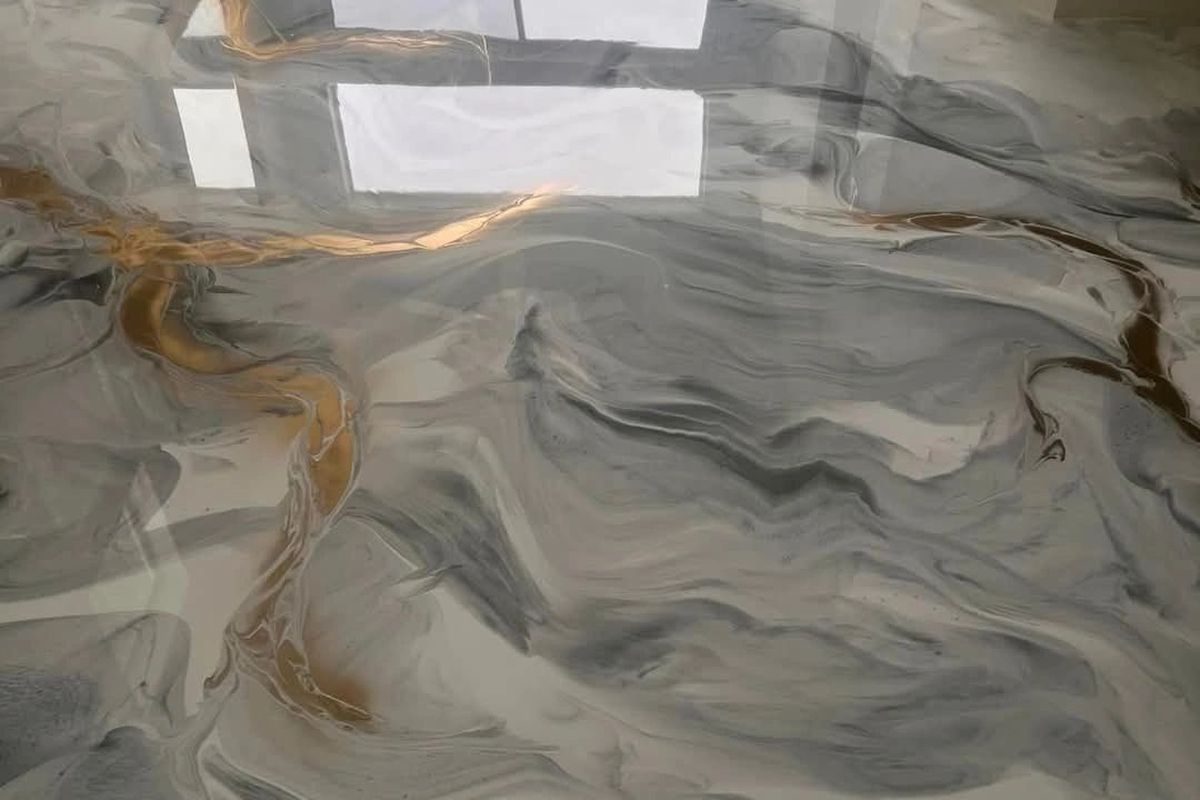
The photo is an example finish, not a documented Golden job.
In Golden, a coating plan should begin with the concrete, not the color chart. A slab can look dry while moisture vapor is still moving through it. Ask whether the contractor will test moisture with an appropriate calcium chloride or in-slab relative humidity method, and how the results affect the system choice. A reading is useful only when it is compared with the coating maker’s limits and the site conditions.
Preparation is where many failures begin. Diamond grinding removes weak surface material and creates a consistent profile for the coating to grip. Acid etching is not an equal substitute: it can leave residue or an uneven surface, and it does not correct weak concrete. Ask what concrete surface profile, or CSP, the system requires and how the crew will verify it before applying material.
Cracks and control joints need separate decisions. A repair may reduce water and debris entry, but filling a moving joint rigidly can lead to a new split beside the repair. Ask which cracks will be patched, which joints will remain visible, and whether a primer is specified for the tested slab. The base coat and any broadcast flake should form a planned system, not unrelated layers.
A small commercial floor downtown may have limited room for equipment, material staging, and keeping people off the slab. Discuss access, ventilation, the work sequence, and how the space will be kept clear during application and cure. If the slab has a floor drain, ask how the coating will end at the drain and whether the finished surface will preserve drainage rather than leave a low spot.
Epoxy, polyaspartic, and polyurea are not interchangeable labels for one performance level. Ask for the full layer schedule, including primer, base coat, broadcast, and topcoat, and confirm which layer provides UV stability. Strong sunlight can make some coatings amber over time. In a garage, also ask how the proposed system addresses hot-tire pickup and what slip resistance is suitable when shoes or tires bring in water.
Cold weather narrows the safe installation window, and a heated room does not guarantee the concrete itself is within the coating’s temperature and humidity limits. Get the required slab and air conditions, cure time before foot and vehicle traffic, and recoat window in writing. If the window is missed, the crew may need additional surface preparation before another coat can bond properly. Plan cleaning and return to use around those limits, not just the application day.
There is no single number that applies to every coating system. Ask the installer to identify the test method, the result, and the system’s published moisture limits. If the reading is outside those limits, get a clear explanation of the options before approving work. A coating over unresolved moisture can blister or lose adhesion.
Usually, joints are there to manage concrete movement. Covering them does not stop that movement, and a rigid coating may crack above the joint. Ask whether the joint will be carried through the finished coating or treated with a material designed for that location. The right detail depends on the joint and the system.
Look for a stated preparation method, the intended concrete profile, and how the crew will handle coatings, weak areas, and repairs. “Prep included” alone does not tell you enough. Ask what happens if grinding exposes more damage than expected, and whether any added work requires your approval before the coating is applied.
The answer depends on the materials, slab temperature, humidity, and the maker’s cure requirements. Ask for separate return times for foot traffic and vehicle traffic, and follow them even if the surface feels hard. Parking too soon can leave tire marks or pull coating from the slab before it has developed enough strength.
Sweep grit away before it is tracked or ground across the surface, then use a mild cleaner suitable for the installed coating. Avoid assuming that strong solvents or abrasive tools are safe. Ask the installer for care instructions specific to the topcoat, including how to remove road residue without dulling or damaging the finish.
Tell us about the floor in Golden. A photo and a rough size are enough to start a written estimate. No street address on our side — local pros come to the slab.
Denver Epoxy Floors is an independent referral service that connects you with local epoxy flooring pros.
 DENVER