Boulder owner garages off alleys can be coated when a van can stage without blocking the block. Winter cure still depends on heat. Basements and garden levels are excellent candidates when they are dry and a poor idea when they show minerals or a musty dark edge.
Rental units get done when the owner requests them and the calendar includes a real cure, not a weekend flip. Parking permits belong in the note or the crew spends the morning moving the truck.
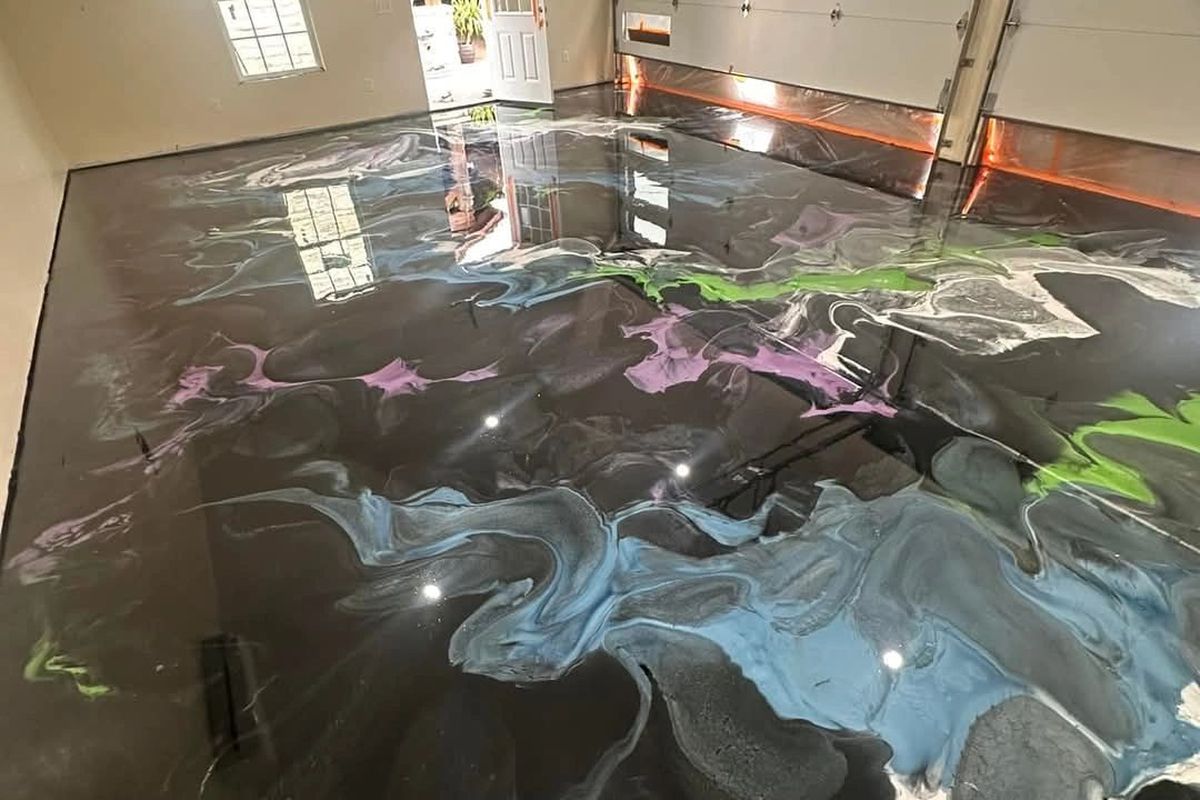
The photo is an example finish, not a documented Boulder job.
Concrete in a garage or lower-level room can look sound and still be a poor coating surface. Before work is quoted, ask how the contractor will check for moisture vapor. Calcium chloride testing measures moisture leaving the surface; in-situ relative humidity testing measures conditions inside the slab. The appropriate method depends on the coating system and its requirements. A visual inspection alone cannot establish moisture readiness.
Ask how the slab will be prepared and what surface profile the coating needs. Diamond grinding removes weak material and creates a consistent texture, often described by a concrete surface profile, or CSP. Acid etching is less predictable and can leave residue or fail to reach a sound profile. A coating needs clean, prepared concrete, not just a rough-looking surface.
Cracks and control joints need separate decisions. A contractor should identify which cracks can be repaired and whether movement is likely to continue. Control joints are designed to manage concrete movement, so filling them rigidly without a plan can lead to cracking through the coating. Get the repair approach in writing, including whether joints will remain visible or be treated as part of the finished floor.
A typical system may include a prepared slab, primer, epoxy base coat, decorative flake broadcast, and a protective top coat. Each layer has a job; skipping primer or applying the next layer at the wrong time can weaken the bond. Ask what each layer contributes and how the installer will handle the recoat window. A cold slab can change cure timing, so the schedule should follow actual slab conditions and product limits.
Garages and shops need a surface that tolerates vehicle traffic, grit, and routine cleaning. Ask about hot tire pickup resistance and the planned texture, not only color. Decorative flakes can add visual texture, while the clear coat and any added slip-resistant material affect how the finished floor feels underfoot. A sample can help you judge appearance, but it does not prove the slab is ready or the installation will be sound.
For a basement, confirm both the moisture findings and the intended use before selecting a system. Sunlight through windows can also affect appearance: some resin top coats can amber with UV exposure, so ask whether the proposed finish is UV stable. For any room, get written limits for temperature and humidity, cure and recoat times, and when foot traffic, stored items, or vehicles can return.
It should help determine whether moisture vapor is within the limits of the proposed coating system. Ask which test method will be used, where readings will be taken, and how results will be compared with the system requirements. If readings are too high, ask what corrective options are appropriate before coating.
A rough appearance does not show whether the surface is clean, sound, or evenly profiled. Grinding can remove weak concrete and prepare a consistent bonding surface. The contractor should explain the target profile and how dust, oil, old coatings, or other contaminants will be removed before primer is applied.
Not automatically. Control joints are intended to accommodate concrete movement, and a rigid repair or coating across them may crack as the slab moves. Ask the installer to identify each joint and explain whether it will be left open, filled with a flexible material, or handled another way in the written scope.
Use the installer’s written return-to-service schedule, not a general rule or a surface that merely feels dry. Cure time depends on the coating, slab temperature, and site conditions. Ask for separate timing for walking, moving stored items, and parking, and keep vehicles off the floor until the stated cure period is met.
Follow the coating installer’s care instructions. In general, remove loose grit before wet cleaning, since abrasive debris can wear the finish. Use a mild cleaner approved for the system and avoid unapproved solvents or harsh tools. Ask what to do about road residue, spills, and any marks that appear after the floor is in service.
Tell us about the floor in Boulder. A photo and a rough size are enough to start a written estimate. No street address on our side — local pros come to the slab.
Denver Epoxy Floors is an independent referral service that connects you with local epoxy flooring pros.
 DENVER