Epoxy floors for Denver garages that see freeze-thaw and road brine
Flake systems that handle magnesium chloride, basement coats in dry rooms, and a calendar that respects a cold slab. Foothill drives included in the plan, not as an afterthought.
Flake systems that handle magnesium chloride, basement coats in dry rooms, and a calendar that respects a cold slab. Foothill drives included in the plan, not as an afterthought.
Denver garages spend winter taking in snow, meltwater, and the magnesium chloride cities put on the streets. That brine is hard on bare concrete and on any coating that was thin or poorly stuck. Prep is a grind to clean concrete, not a wash and a promise. Unheated garages also have a cure limit: if the slab is cold, the material does not care that the forecast looks nice at noon.
Basements and garden levels in older Denver, Lakewood, and Boulder houses are the other half of the work. They make excellent floors when they are dry and poor ones when groundwater or a bad downspout is the real issue. Hail season matters too. After a storm, every car moves inside and the floor has to be something you can sweep glass off.
Golden and the foothill side add grade and weather. We come to the slab. There is no street address on this site.
Full flake is the Front Range garage system. It hides salt residue and snowmelt stains and gives wet boots texture. The top coat has to survive winter tires, not just a showroom shoe.
A dry Denver basement is a good solid-color or metallic room. We test first. Efflorescence means we stop and talk about water, not pigment.
Metallic floors are for heated, stable rooms. A detached garage in January is not the place to chase a marble pattern.
Commerce City and foothill shops need a tougher, plainer floor and a cure plan that respects cold metal buildings.
Small retail and office floors in the Tech Center orbit, scheduled around business hours. No invented contractor license number.
A covered entry that does not get plowed snow piled on it can sometimes be coated. A slab that is the snow-storage plan should stay bare or get a different product conversation.
Magnesium chloride will still drip off the car. On a coated floor you can rinse it. In bare concrete it is part of the spall you see in March.
Bare slabs chalk and then turn to paste when snow melts off the bumper. A sealed floor ends that cycle if the bond is real.
Glass and grit sweep off a coated floor. They grind into an open slab.
A finished floor is what makes a dry basement a room during the months you actually need the space.
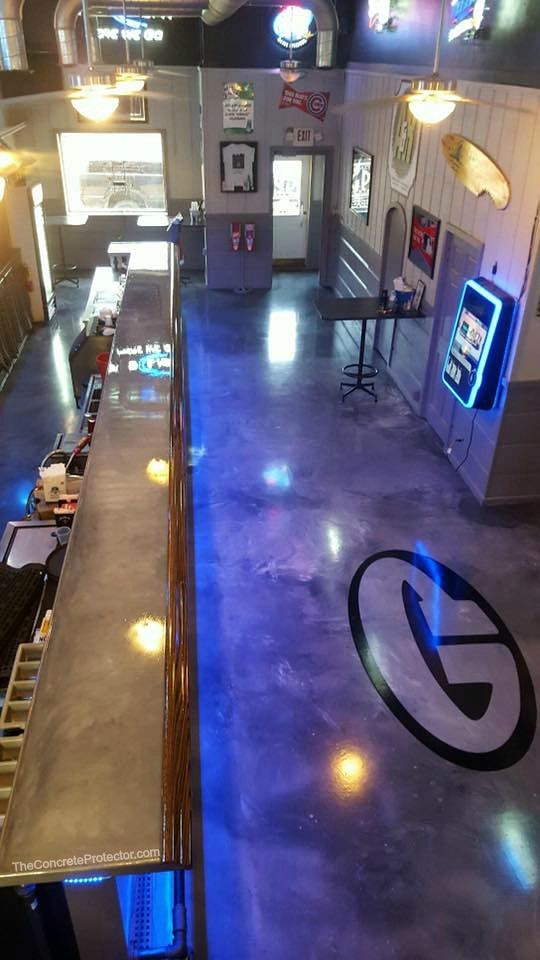
These photos are examples of flake, metallic, and before-and-after garage floors. They are not claimed as Denver jobs.
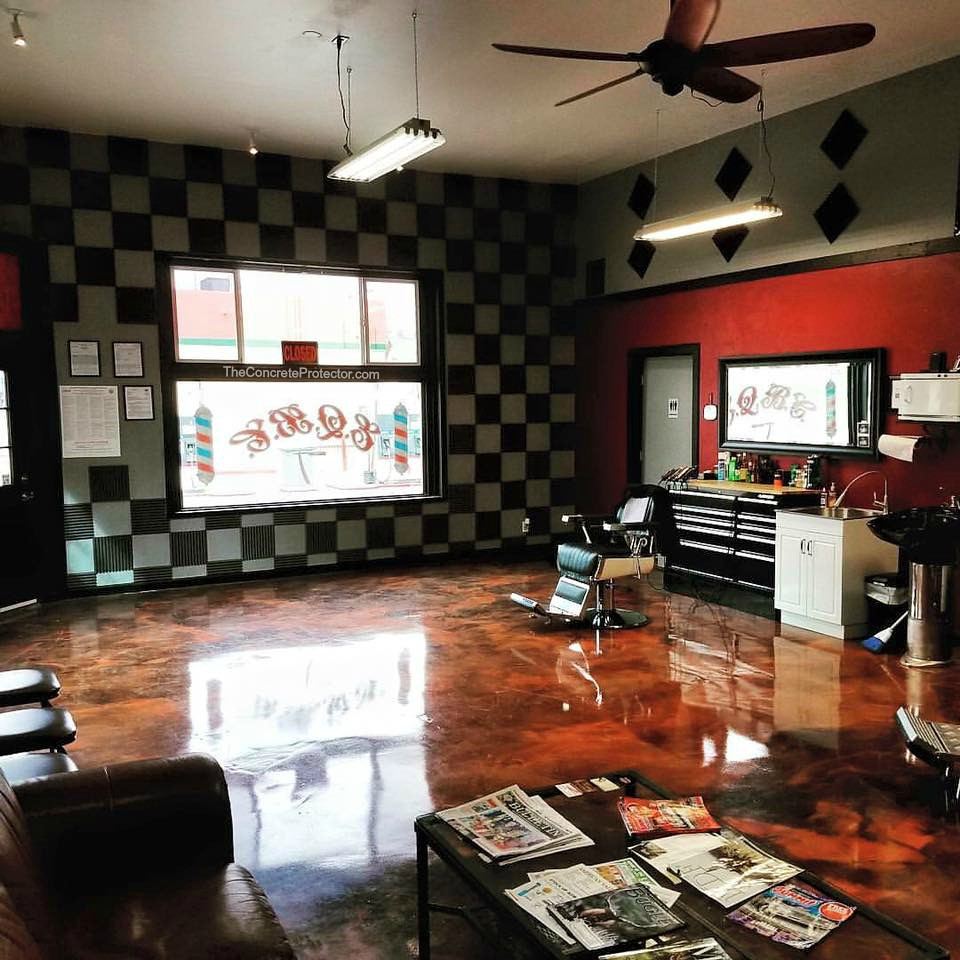
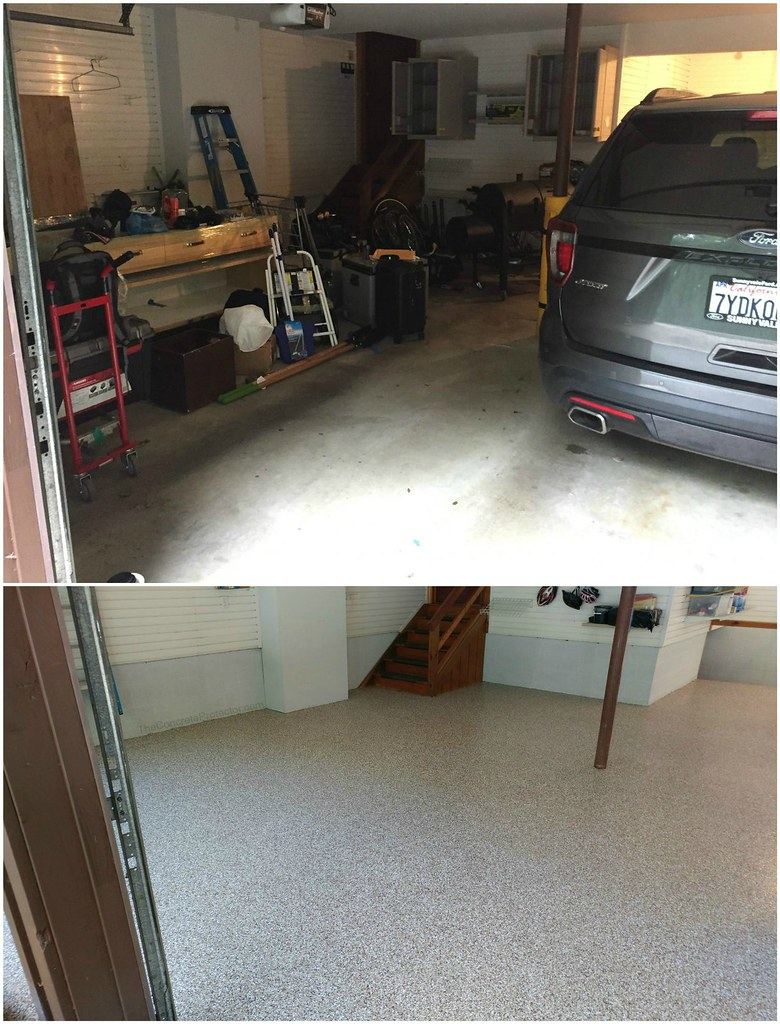

These photos are examples of flake, metallic, and solid systems. They are not claimed as jobs in Denver. Color is chosen for your slab.
Broadcast flake hides the white residue road treatments leave and adds grip when the floor is wet from a thaw.
A calm solid floor fits a basement you will furnish. It shows dirt more than flake, which is fine in a room without tire traffic.
Metallic work needs temperature control. Foothill shops and open January garages are outside that box.
Rinse magnesium chloride when you see the white film. Use pads under stands and snowblower shoes. Freeze-thaw will test the edges of the slab. A coating is not a substitute for keeping meltwater from sitting there for a week.
A heated Lakewood garage and an unheated Golden shop do not share a cure calendar. The town pages keep them apart.
Heated garages and basements, yes, if the slab temperature is in range. Unheated buildings usually wait for a warmer slab.
It is harsh. A well-prepped floor lets you rinse it off. Leaving brine to puddle on any floor, coated or not, is still a bad plan.
Golden is listed, and other west-side towns are in range when the drive is safe. Snow and grade belong in the request.
No. We come to the floor. The estimate starts with a photo.
No. They are freely licensed examples of the finishes, including a before-and-after garage, not a Denver portfolio.
Tell us if the garage is heated and if the driveway is steep. Send a photo of the slab, including salt crust and cracks.