Olde Town and the older Arvada grid have smaller garages and real winter use. Flake, a grind, and a heated-versus-not conversation. Farther northwest the bays are newer and larger, with the same road brine once the cars come home.
West Arvada driveways start to pitch. If a van cannot sit level, mention it. Cure temperatures and parking the crew are both affected.
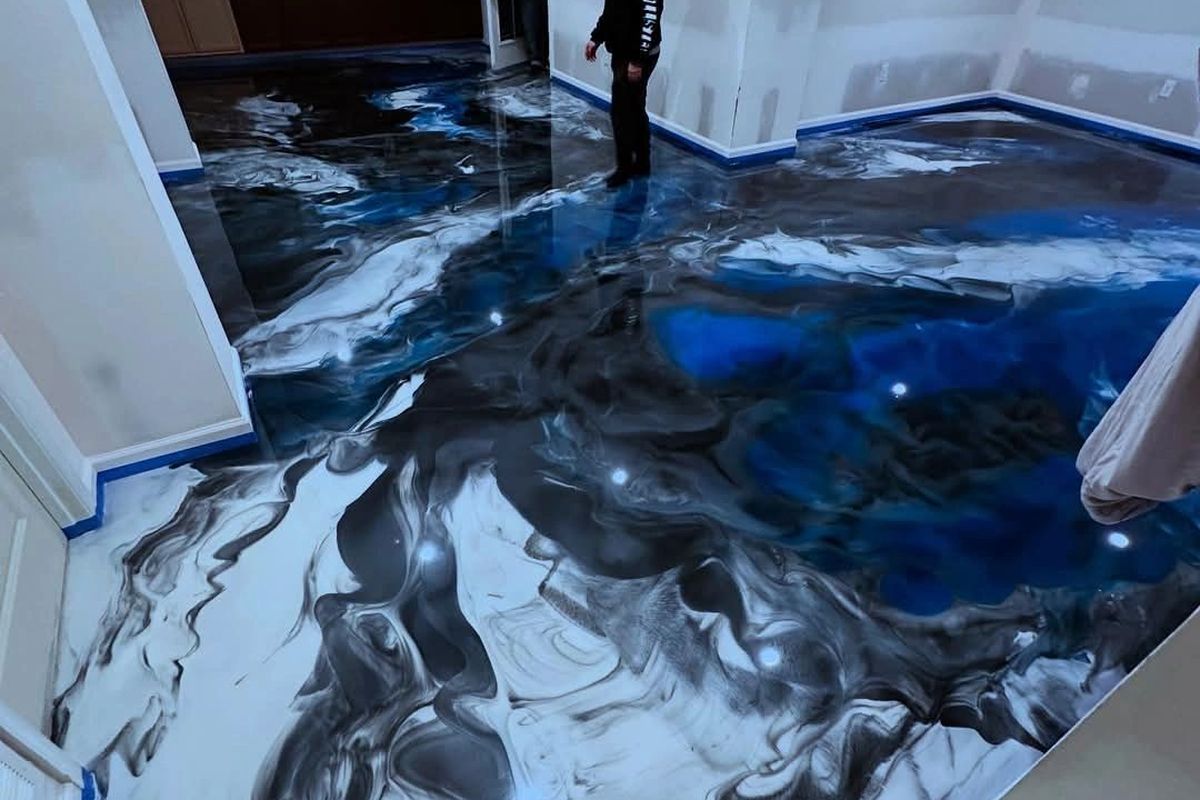
The photo is an example finish, not a documented Arvada job.
In the smaller garages around Olde Town and the older Arvada grid, access can affect how the floor is prepared as much as the coating choice. Ask how the crew will move equipment and manage dust in a tight space. Diamond grinding opens the concrete and creates a consistent profile for coating; acid etching is less reliable when it leaves an uneven or insufficient surface profile.
A coating quote should explain how the contractor will check for moisture vapor before installation. Depending on the conditions, testing may use calcium chloride or in-slab relative humidity methods. A dry-looking surface does not establish that moisture is low enough for the proposed system. Ask what the results mean for your floor and whether the coating manufacturer’s limits can be met.
Cracks and control joints need separate consideration. Some cracks can be filled before coating, but joints may need to remain visible or be treated in a way that allows movement. Ask which repairs are included and how the installer will handle edges, corners, and areas where old concrete has spalled. Skipping those details can leave weak spots beneath an otherwise sound-looking finish.
Epoxy, polyaspartic, and polyurea describe different parts of a floor system, not a guarantee of performance by themselves. Epoxy is commonly used for a bonded base coat, while faster-curing coatings may be used for other layers. Ask which layers are proposed, how they work together, and what temperature and humidity limits apply during installation and cure.
For garages that see winter road brine and hot tires, ask about the full system rather than just the topcoat. A broadcast flake layer can add texture and help mask everyday marks, but its coverage and the protective coat above it matter. If the floor receives strong daylight, confirm that the finish is UV-stable; some coatings can amber or change appearance with exposure.
A sloped west Arvada driveway can affect how a vehicle sits and how water moves toward the garage. Discuss traction and drainage before choosing a glossy finish. Slip resistance depends on the surface texture and how it is maintained, so ask what texture is planned and how it changes cleaning. Confirm the cure and recoat windows, too, and plan vehicle access around the stated limits.
Ask for a moisture assessment before the coating is selected. Calcium chloride and in-slab relative humidity tests measure moisture in different ways, so the contractor should explain which method is appropriate and how the results compare with the system’s limits. If conditions are unsuitable, discuss options before grinding or coating begins.
Age alone does not determine the right system. The installer should inspect for previous coatings, oil contamination, weak concrete, cracks, and repairs, then confirm that the surface can be prepared to the required profile. In a tight garage, also ask how dust control and equipment access will be handled.
They can sometimes be filled for appearance, but concrete movement may cause a filled joint to crack or show through again. Ask whether each joint will be left open, filled, or treated with a flexible detail, and what appearance to expect. The right choice depends on the floor and coating system.
There is no safe universal waiting time. Cure depends on the coating layers and the temperature and humidity during installation. Ask for separate timelines for foot traffic, light use, and vehicle parking, and follow them even if the surface feels dry. Cold conditions can affect the schedule and cure.
Sweep or vacuum grit before it is tracked across the coating, then clean with a suitable neutral cleaner and water. Remove brine residue rather than letting it dry in place, and avoid harsh tools that can scratch the surface. Ask the installer which cleaners are compatible with the chosen topcoat.
Tell us about the floor in Arvada. A photo and a rough size are enough to start a written estimate. No street address on our side — local pros come to the slab.
Denver Epoxy Floors is an independent referral service that connects you with local epoxy flooring pros.
 DENVER