Lakewood ranches have garages that have taken fifty winters of meltwater. Salt crust and old paint come off in the grind. Alleys make access easy on some blocks and impossible for a large van on others. Say which.
Basements in these houses are often the project. Dry ones coat well. If you see white mineral on the concrete every spring, send that photo before you pick a metallic color.
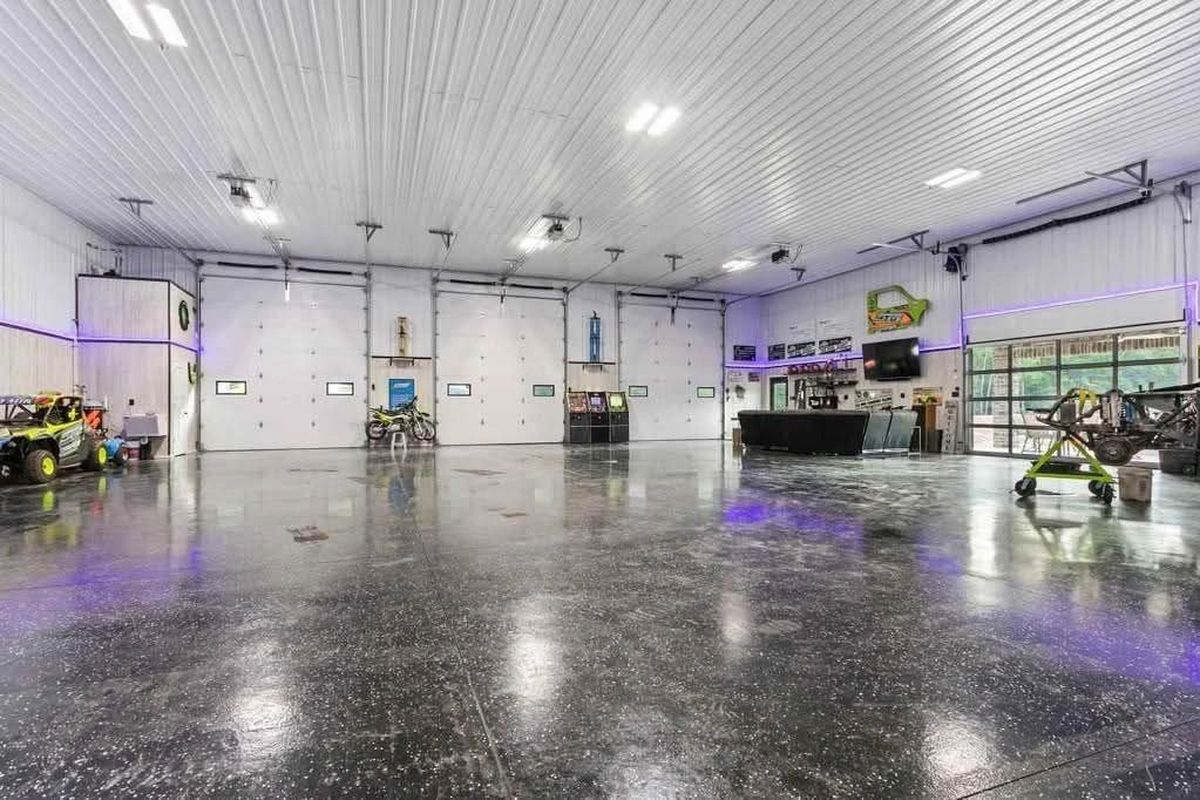
The photo is an example finish, not a documented Lakewood job.
In Lakewood garages, old paint, oil, and road residue can hide weak concrete. A contractor should identify what is on the slab before setting a prep plan. Diamond grinding removes coatings and opens the concrete mechanically. Acid etching is less dependable on painted or contaminated floors and can leave an uneven profile, so ask how the finished surface will be checked before primer goes down.
Ask what concrete surface profile, or CSP, the coating system requires and how the crew will verify it. The profile should match the primer and coating, not simply look rough. Grinding dust also needs to be collected and removed. A clean, properly profiled slab gives the next layers a chance to bond; coating over residue can lead to peeling that means grinding the system off again.
Cracks and control joints need separate decisions. A stable crack may be filled with a compatible repair material, while a moving joint generally needs to remain able to move or be treated with a detail designed for it. Ask whether the bid includes crack preparation, joint treatment, and repairs discovered after grinding. A smooth-looking fill is not proof that movement has been solved.
Before a basement coating is chosen, ask for moisture-vapor testing rather than relying on a visual check alone. Calcium chloride testing measures moisture emission at the surface; in-situ relative humidity testing measures conditions within the slab. Each method has limits, and the result must be compared with the coating maker’s requirements. A basement that looks dry on inspection may still need a different system or more investigation.
Discuss primer, base coat, and topcoat as parts of one system. The primer must suit the prepared concrete and moisture conditions; the base coat provides the selected color or flake finish; the topcoat protects the surface. If decorative flakes are used, ask whether they are broadcast to refusal and how excess is removed. A thin or inconsistent finish can wear unevenly and be difficult to repair invisibly.
Lakewood’s cold-season scheduling makes slab and room conditions worth confirming before installation. Ask the crew to record concrete temperature, air temperature, and humidity and to follow the product’s limits for application, recoat, and return to service. A fast surface set does not mean the floor is ready for tires or heavy equipment. For garages, ask specifically about hot-tire pickup resistance and the full vehicle return time.
It should identify the moisture test method, where readings will be taken, and how results affect the proposed system. Ask whether testing happens before the coating is selected and what happens if readings exceed the manufacturer’s limits. A test result is useful only when the installer explains its meaning for that slab.
Not automatically. Control joints are intended to accommodate concrete movement, and a rigid coating bridge may crack or separate as the slab shifts. Ask the installer to identify each joint and describe whether it will remain visible, receive a flexible treatment, or use another system detail. The plan should be clear before work begins.
Ask what slip-resistant texture can be incorporated and how it affects cleaning. Texture that is too light may not provide the feel you want when the floor is wet, while heavy texture can hold dirt. The right balance depends on whether the space is a garage, basement, or work area and how it will be used.
Use the installer’s written schedule for foot traffic, light use, and vehicle traffic; these are different cure stages. Temperature and humidity can affect timing, so a generic number of hours may not apply to your installation. Do not move vehicles back early just because the coating feels dry to the touch.
Follow the care instructions for the specific coating system. In general, remove grit before mopping, use a mild cleaner, and avoid abrasive pads or harsh chemicals unless the installer confirms they are suitable. Promptly wipe up oil or other spills, and use soft pads under equipment that could scratch the finish.
Tell us about the floor in Lakewood. A photo and a rough size are enough to start a written estimate. No street address on our side — local pros come to the slab.
Denver Epoxy Floors is an independent referral service that connects you with local epoxy flooring pros.
 DENVER